
Stormwater & drainage
Stormwater and drainage plumbing on the Mornington Peninsula
Planning estimates
Rough idea of a drainage fix?
Answer a few quick questions for a broad planning guide based on rates supplied by Precision Plumbing and Concreting. Not a quote.
Common problems
Water around a property can come from several different places. Roof runoff, surface water, groundwater and wastewater need different responses. Tell us where the water appears, whether it happens only during rain and which drains or fixtures are affected. A photo of the problem in wet weather is often more useful than a photograph of a dry grate after the water has gone.
A blockage can stop an otherwise suitable system from working. In other cases the drain is in the wrong place, the surface falls away from it or the outlet arrangement needs attention. Adding concrete or changing levels can also change where water travels. Your enquiry should explain what has changed recently, including new paving, landscaping, extensions or drainage works.
Pooling on driveways and paths
Water may collect near garage openings, low points or the meeting of old and new surfaces. The scope needs to consider the surface falls, existing grate positions and where collected water can discharge. A grate alone does not resolve a level or outlet problem.
Blocked or overflowing drains
Describe which drains are affected and whether the issue occurs in dry weather as well as during rain. Sewer and stormwater should not be treated as interchangeable. If sewage is escaping or an authority asset may be affected, contact the relevant water authority for guidance as well as arranging plumbing assistance.
Wet ground beside a building
Persistent wet ground may need investigation of surface runoff, sub-ground drainage or a possible leak. Avoid assuming every wet patch is a pipe blockage. Tell us how long the problem has been present, where it is worst and whether you have any previous inspection reports.
Drainage for new works
A driveway, extension, hardstand or landscaped area needs its drainage considered before the surface is finished. Supply proposed plans, existing drainage information and any legal point of discharge report so connections, access and reinstatement can be discussed together.
How we find the cause
Start with what you have observed and any information already available about the property. The next step is to discuss the affected area, current drainage arrangement and access for assessment. Investigation should distinguish a blocked private drain from a surface-water or outlet issue before deciding what needs repair, replacement or new construction.
Levels and discharge matter as much as the visible drain. Existing drawings, pit positions and authority information can help identify the intended route. If the relevant discharge point is unknown, a Shire legal point of discharge report may be needed. The appropriate investigation method and any additional specialist work should be discussed for the site; do not assume equipment or an inspection is included without checking the quote.
The proposed repair should explain what it addresses and what is included in reinstatement. If concrete needs cutting and removal, or excavation crosses a path or driveway, include that in the conversation early. Coordinating plumbing and concrete avoids leaving the final surface as an unanswered question after the pipework is repaired.
Pits, strip drains, sub-soil, pumps and tanks
The components need to work as a system, with suitable collection points, pipe routes and an approved discharge arrangement. Precision's documented stormwater offering includes roof drainage, pits, channel drains, subsoil drainage, tanks and pumps. Which of these belongs in your project depends on the site and the problem being addressed.
Pits and grates
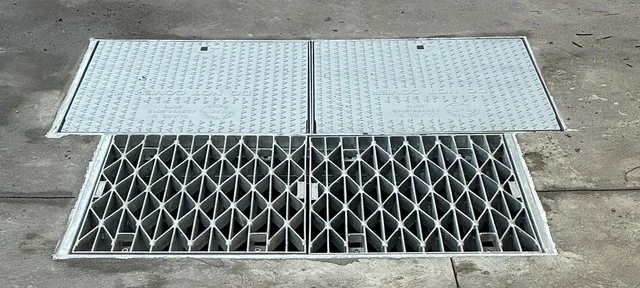
Pits provide collection and access points within the drainage system. Grates and covers need consideration alongside finished levels, intended use and maintenance access. Describe the location and traffic over the area so the proposed detail can be scoped rather than selected by appearance alone.
Strip and channel drains
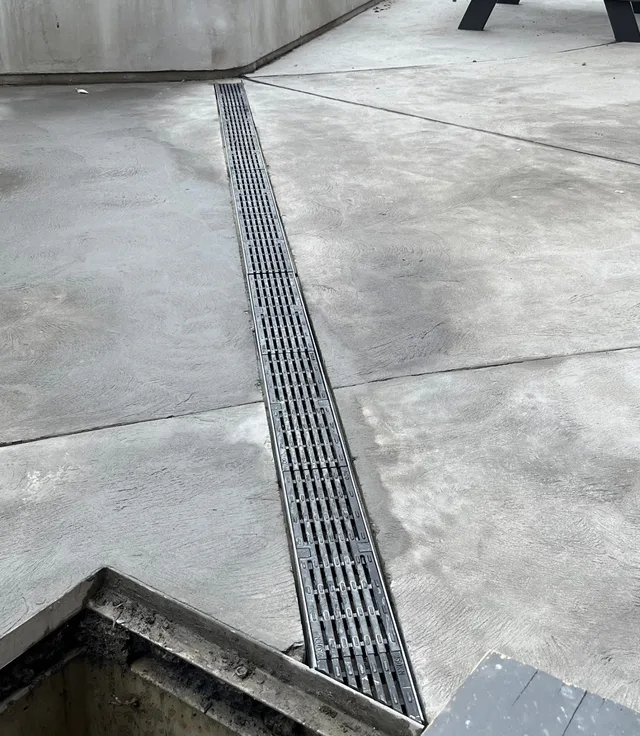
A linear drain may suit surface-water collection at a driveway, paved area or other level transition. The surface must direct water toward it and the drain needs a suitable connection. Where concrete is involved, plan the position and levels before the pour or include cutting and reinstatement in a retrofit scope.
Sub-soil drainage
Sub-ground drainage addresses water below the finished surface, rather than replacing roof-water or sewer pipework. Its need, route and outlet must be assessed for the property. Mention persistent wet areas, previous excavation and any landscaping or retaining structures that affect the proposed works.
Pumps, tanks and roof drainage
Tank and pump systems, downpipes and roof drainage are existing service capabilities. Share the intended use, existing equipment and access for maintenance. A system should be scoped for the property and relevant requirements, rather than assuming a tank or pump is the right response to every drainage concern.
Septic and sewer
Sewer takes wastewater to the water authority's network. An onsite wastewater system treats and manages it at an unsewered property. Neither is a stormwater outlet. Know which arrangement serves your property before asking for a new connection, alteration or repair; South East Water can help confirm sewer availability and connection requirements.
Mornington Peninsula Shire requires approval for installing or altering onsite wastewater systems within the scope described on its septic permit page. Supply any existing permit, system information or servicing record when you enquire. The applicable approvals should be checked before changing the system, not after the excavation or installation is underway.
For a blocked sewer, responsibility depends on where the blockage is. South East Water's guidance distinguishes private drains from its sewer network. A blockage within your home or a combined private drain is generally the property owner's responsibility; the authority handles its own sewer. If the location is unclear, a licensed plumber can help identify the cause and the appropriate next step.
Project drainage work
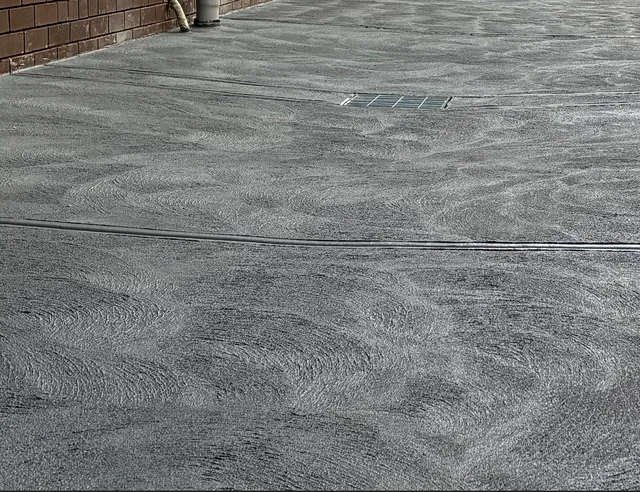
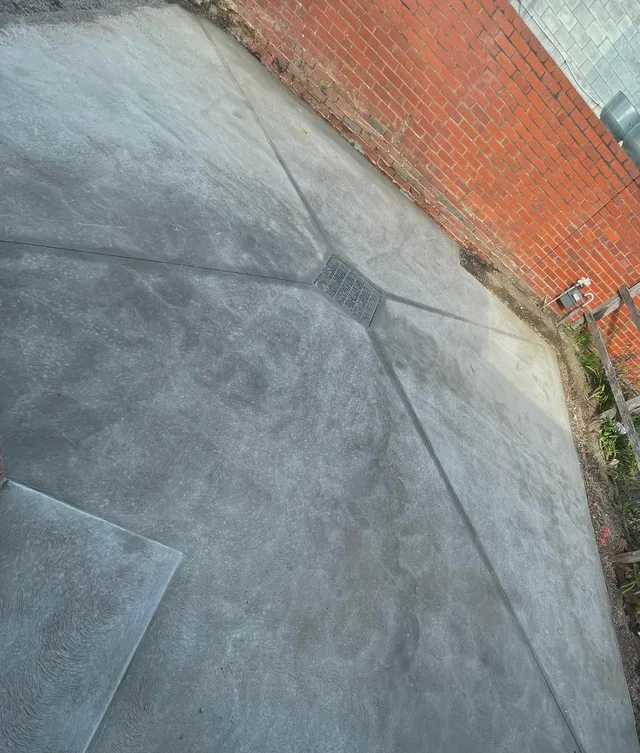
The supplied photographs show drainage integrated with concrete and access surfaces. They are examples of project details, not a diagnosis for another property. Precision services the Mornington Peninsula, including Mount Martha, Mornington, Dromana, Rosebud, Rye and Portsea. Discuss your site and outlet requirements so the proposed work addresses the actual problem.
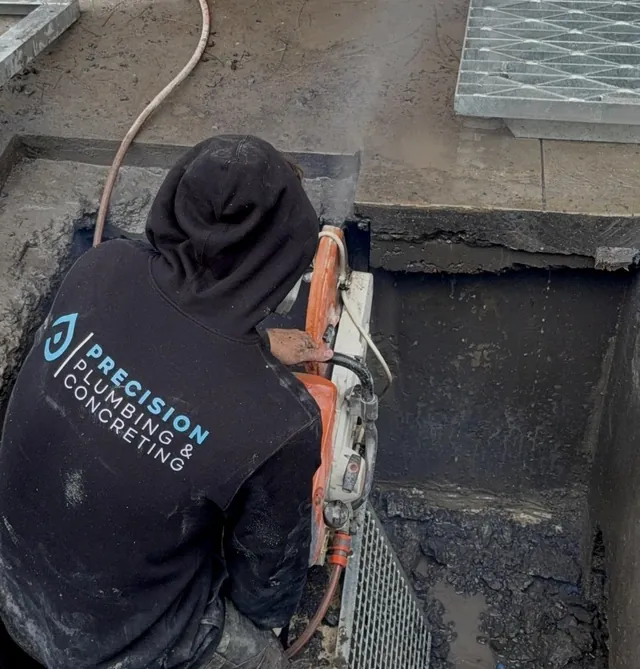
Concrete removal and reconstruction around a new grate set-in.
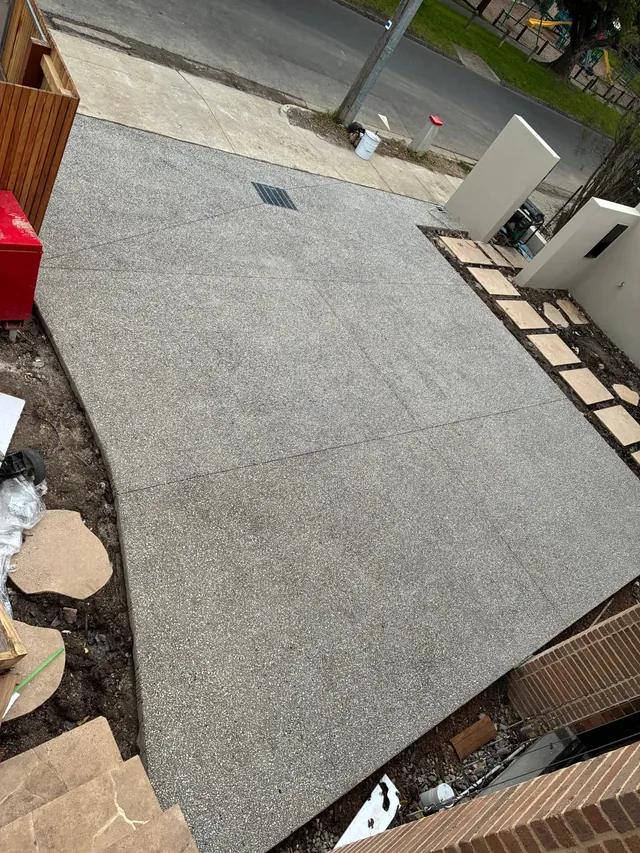
Drainage and the exposed aggregate surface meet at the crossover.
Reviews
Read available customer feedback on the Precision Plumbing & Concreting Google profile, or the feedback already shared on this website. For a drainage enquiry, ask questions about the proposed investigation, scope and reinstatement so you know what is being quoted for your property.
FAQ
What is a legal point of discharge?
It is the point specified by the Shire for stormwater from the property to discharge. The Shire has an application process to confirm it, and a report may be required for building work. Do not assume that the nearest drain is an approved connection for your project.
Who fixes a blocked drain?
It depends on the drain and where the blockage lies. A licensed plumber can assist with private drains. South East Water's sewer guidance says it handles blockages in its sewer, while private or combined private drains are the property owner's responsibility. Council stormwater assets are a separate matter.
Can you coordinate drainage with a concrete driveway?
Yes. Plumbing and concreting packages are an established offering. Include driveway levels, access and surface reinstatement in the scope. The correct drain position and outlet must be checked before the concrete work is finalised.
Does every drainage job need a permit?
Requirements depend on the work and location. Road reserve connections, changes to onsite wastewater systems and other regulated works may need approvals. Tell us about any planned work outside the property boundary and supply relevant Shire or water authority correspondence.
What should I send with my enquiry?
Your suburb, a description of the problem, when it happens and any previous drainage information. Mention affected areas, access restrictions and planned concrete or landscaping work. Drawings and photographs can be sent separately through the established plans email process if required.
Discuss your drainage project
Describe the affected area, what happens during rain and any existing inspection or discharge information. Tell us if the project also involves excavation, concrete or a crossover. The enquiry is reviewed before the next step is agreed; it is not a confirmed appointment.
Describe your drainage issue
AI guidance only, not a diagnosis or quote. A licensed assessment is needed to confirm the cause and scope.
Active flooding, sewage or water near electrics? Keep clear and call 0421 992 400. For immediate danger, call 000.